Crossing the Alps from Garmisch to Sterzing
From Werdenfelser Land to the Sunny South Tyrol 🏔️🥾✨
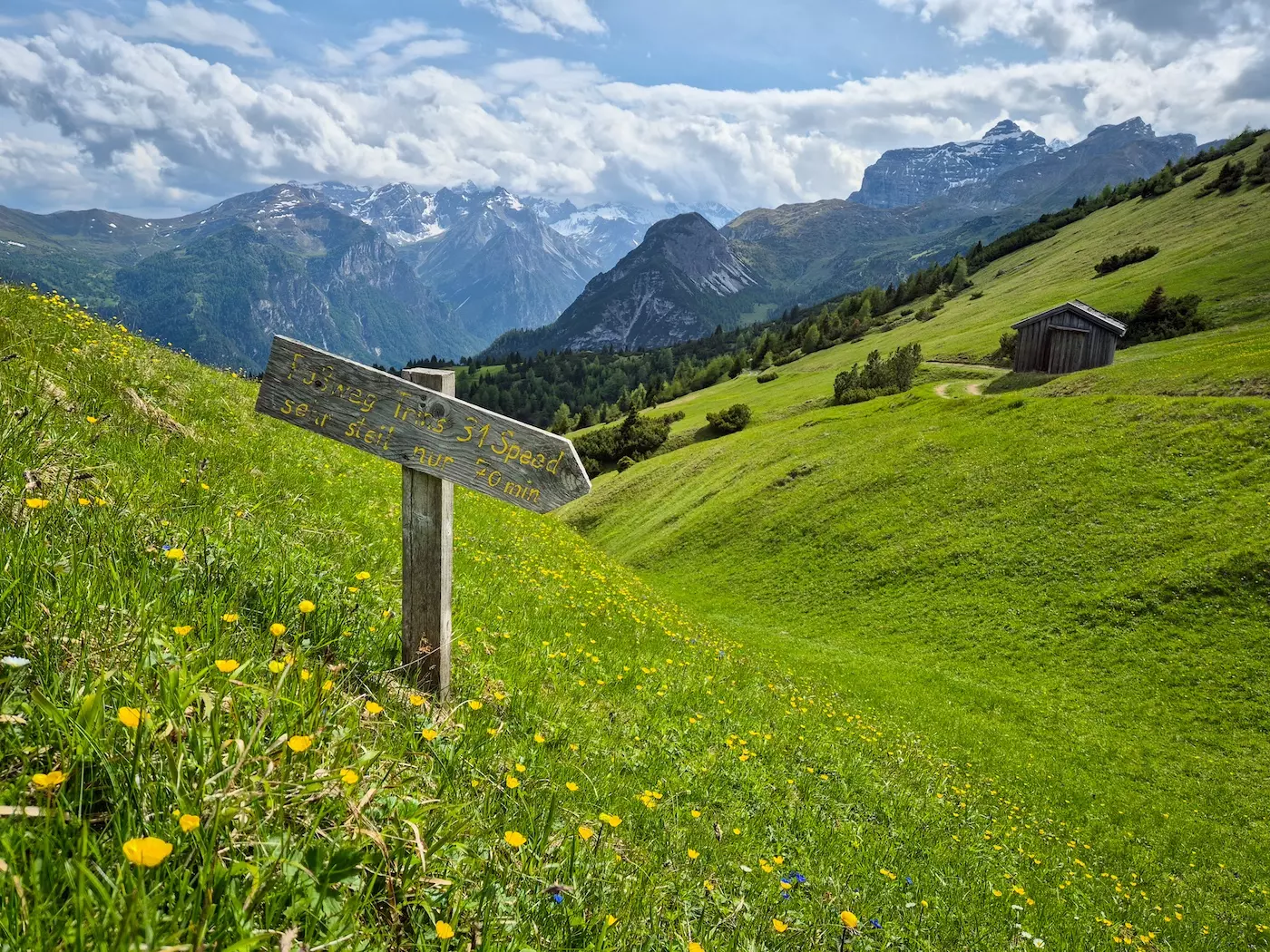
This Alpine crossing combines impressive landscapes, grand panoramas, and the authentic feeling of long-distance hiking. Starting from the charming streets of Garmisch-Partenkirchen, your path leads through the roaring Partnach Gorge 🌊, continues to Mittenwald, and takes you deep into the mighty mountains of the Karwendel ⛰️. Soon, Innsbruck unfolds far below you before you immerse yourself in the silent high-mountain scenery of the Stubai Alps on paths offering spectacular views 🌄.
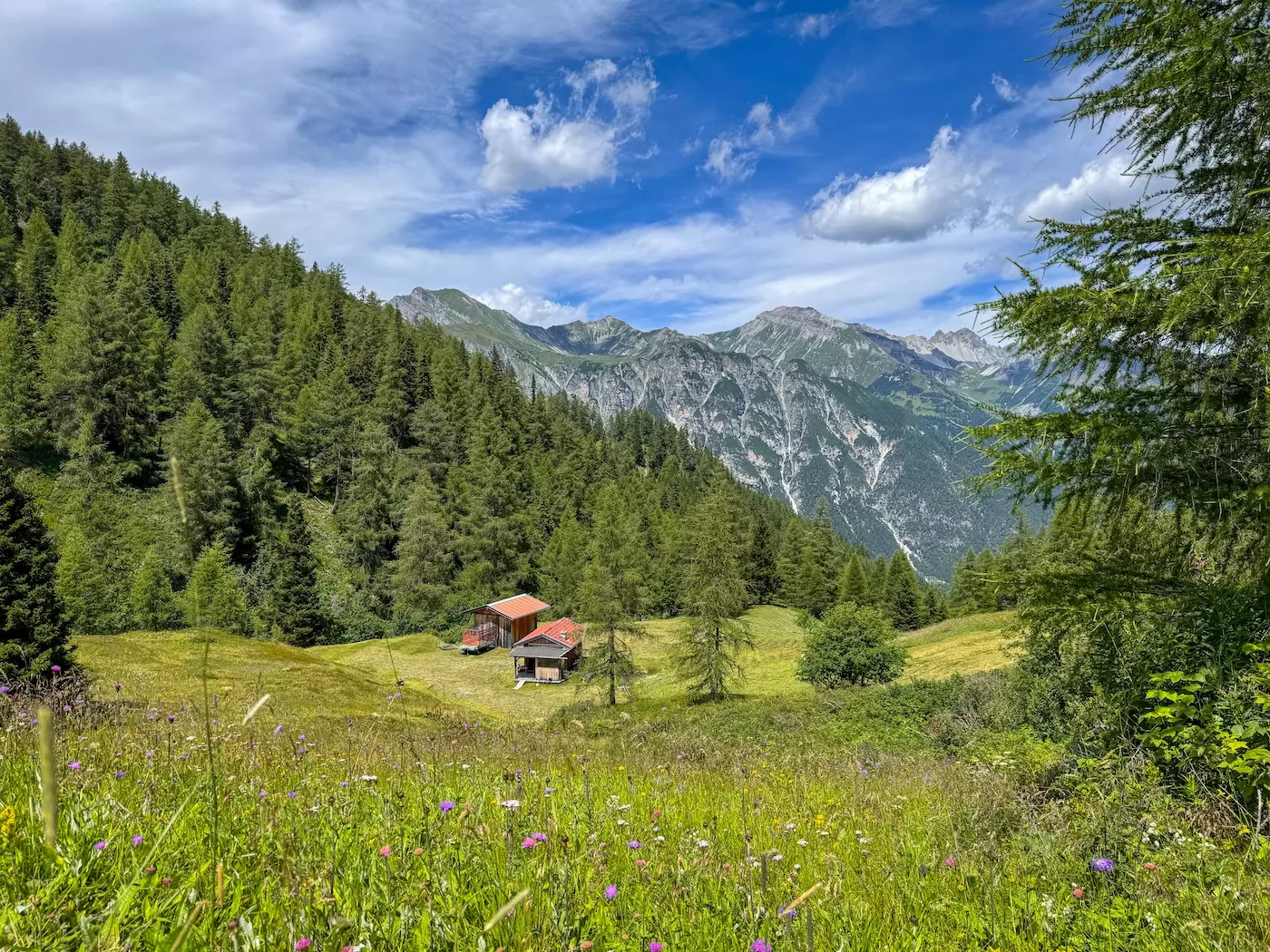
Flowering alpine meadows 🌼, small chapels ⛪, and wide high valleys accompany you to the idyllic Obernberg Valley. At the secluded Sandjöchl, you finally cross the main ridge of the Alps and experience that special moment of arriving on the southern side 🌞. With every step, the light grows softer and the panorama wider until you reach the Rosskopf via the Dolomieu Trail. From here, with views of the Dolomites, you glide down into the medieval old town of Sterzing 🏰 – a destination that perfectly rounds off this journey.
This Alpine crossing combines sporty stages with moments of pure enjoyment, rustic mountain huts, regional culinary delights 🧀🍷, and the unique feeling of traveling from north to south on foot. A trekking tour full of variety that will stay in your memory for a long time.
Arrival to Garmisch
Stroll through the charming streets and soak up the cozy atmosphere of this popular Bavarian resort at the foot of the Zugspitze.
Hotel (example): Hotel Vier Jahreszeiten Garmisch
Garmisch – Mittenwald
Pass the famous ski jump and walk through the dramatic Partnach Gorge, where rushing waters have carved deep into the rock. From Wamberg, hike to the Elmauer Alm and continue through blooming meadows and valleys to Lauter- and Ferchensee. Overnight stays are in Mittenwald, renowned for its violin-making tradition and Lüftlmalerei murals.
Hotel (example): Hotel Gästehaus Bichlerhof
distance
climb
descent
duration
Mittenwald – Innsbruck
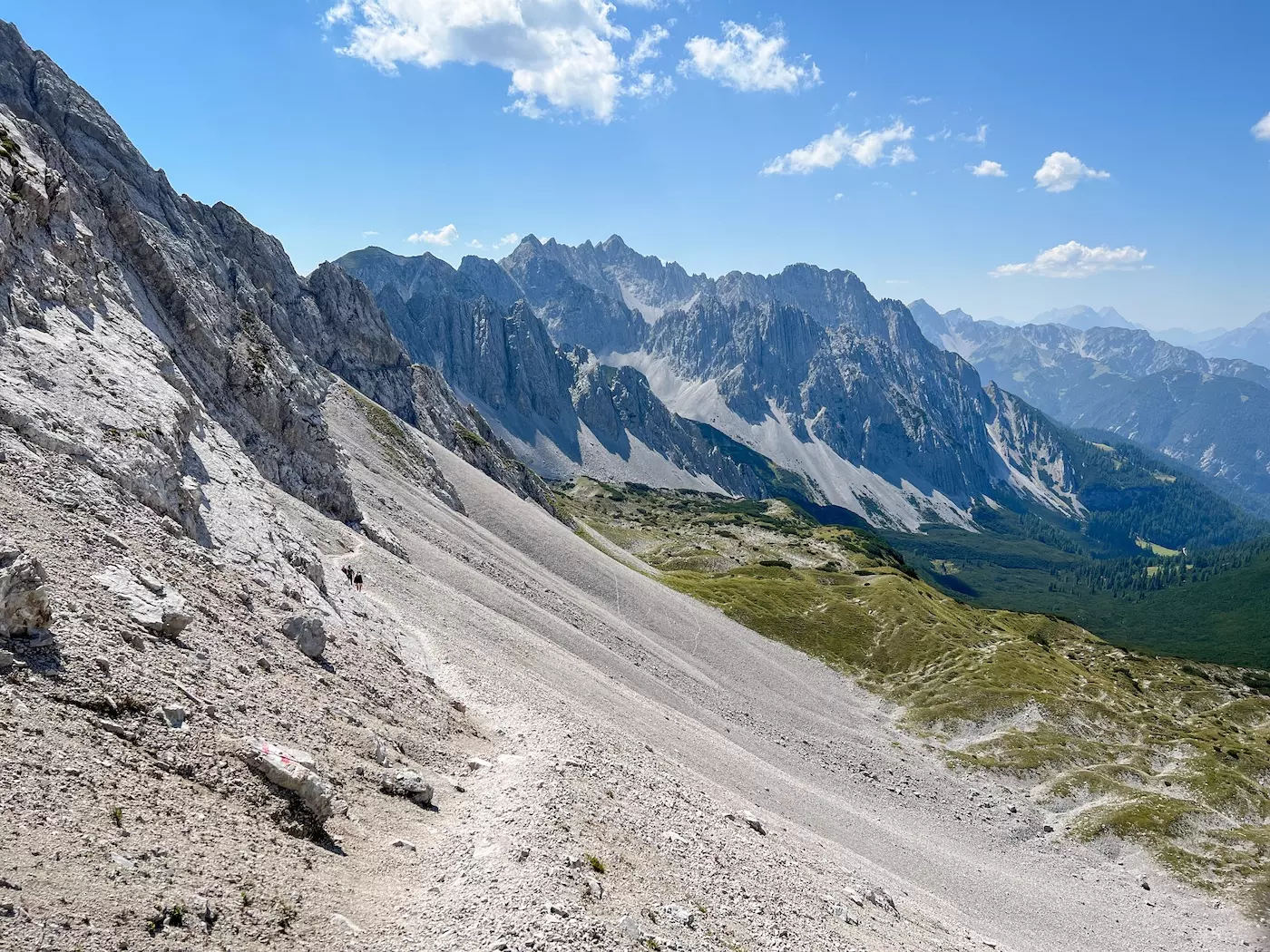
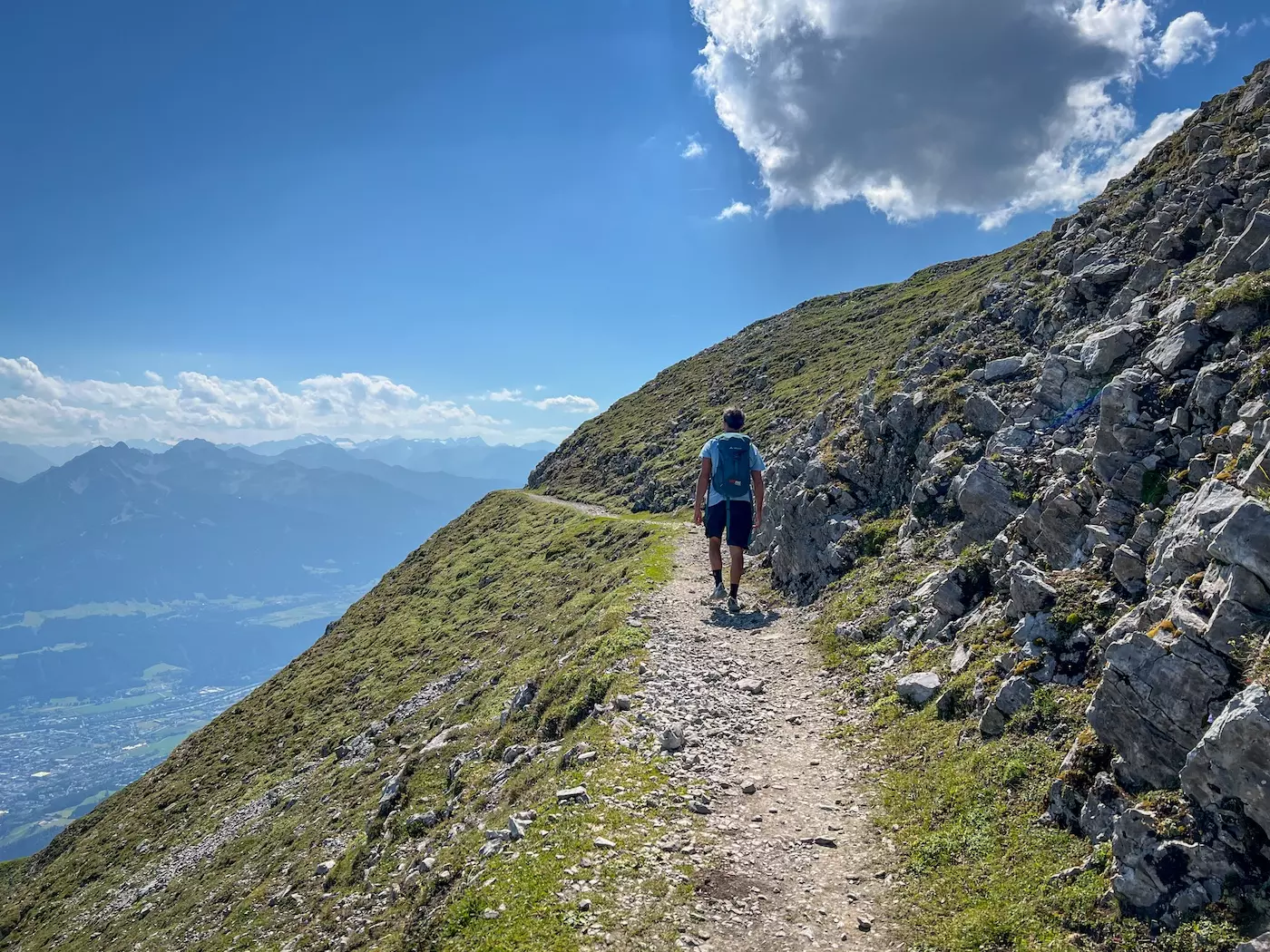
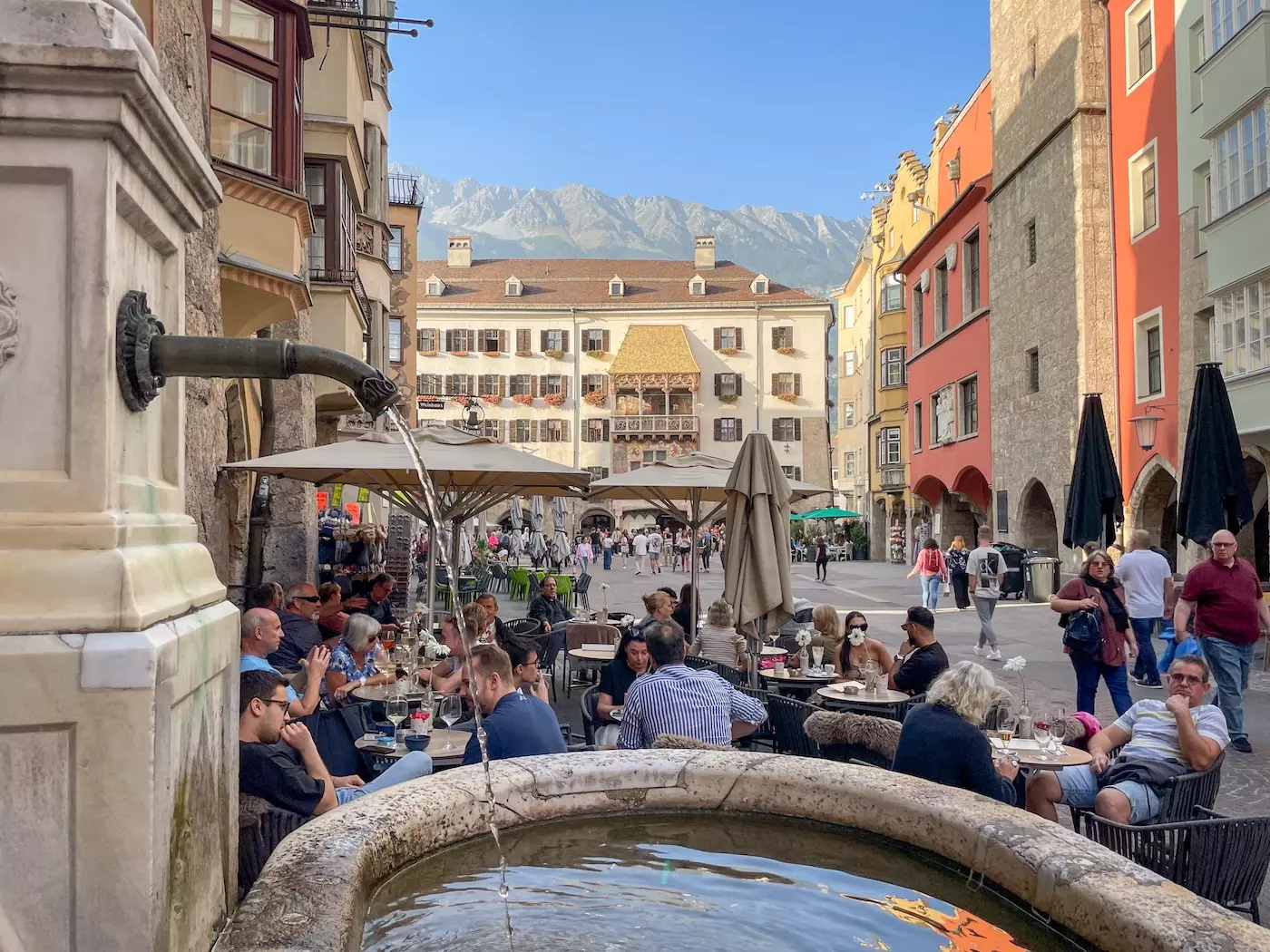
A transfer takes you to the Karwendel National Park at Möslalm, where the ascent to the Nordkette ridge begins. From the Pfeishütte, a spectacular high trail winds along rocky peaks to the cable car station, offering breathtaking views of the Inn Valley. After a stop at the mountain restaurant, a short cable car ride brings you down to Innsbruck. No visit would be complete without exploring the Old Town and its iconic Golden Roof.
Hotel (example): Hotel Central Innsbruck
distance
climb
descent
duration
Innsbruck – Gschnitztal/Wipptal
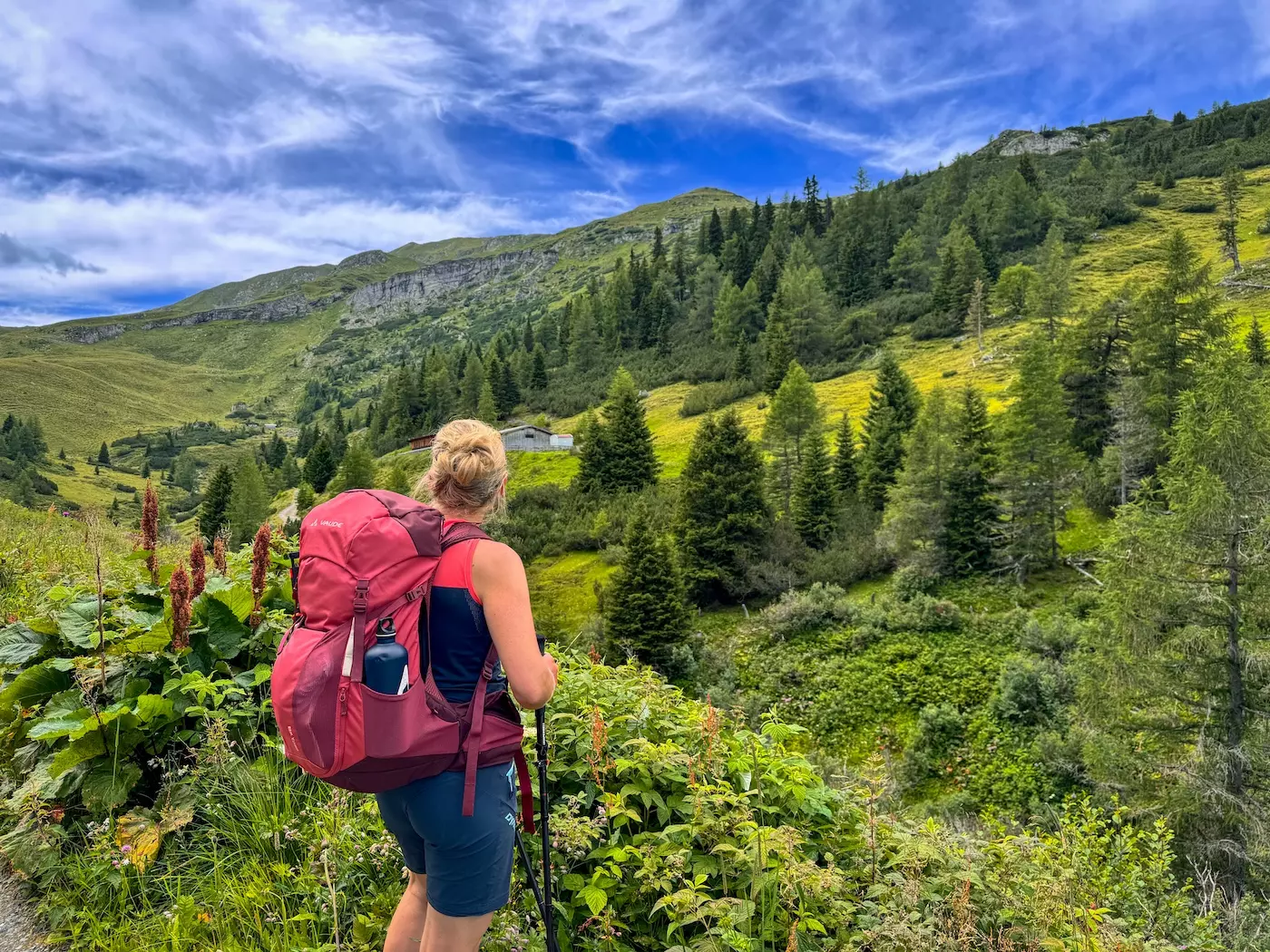
Take a bus and cable car up to the Serlesbahn mountain station in the Stubai Valley. Against the dramatic backdrop of the Stubaier Alps and their rugged peaks, you hike to the pilgrimage church of Maria Waldrast and linger at the monastery before beginning the alpine ascent to the Blaser Hut on the so-called Flower Mountain. From there, trails through meadows and forests lead down into the rustic and picturesque Gschnitztal.
Hotel (example): Hotel Hohe Burg
distance
climb
descent
duration
Gschnitztal/Wipptal – Obernbergtal/Wipptal
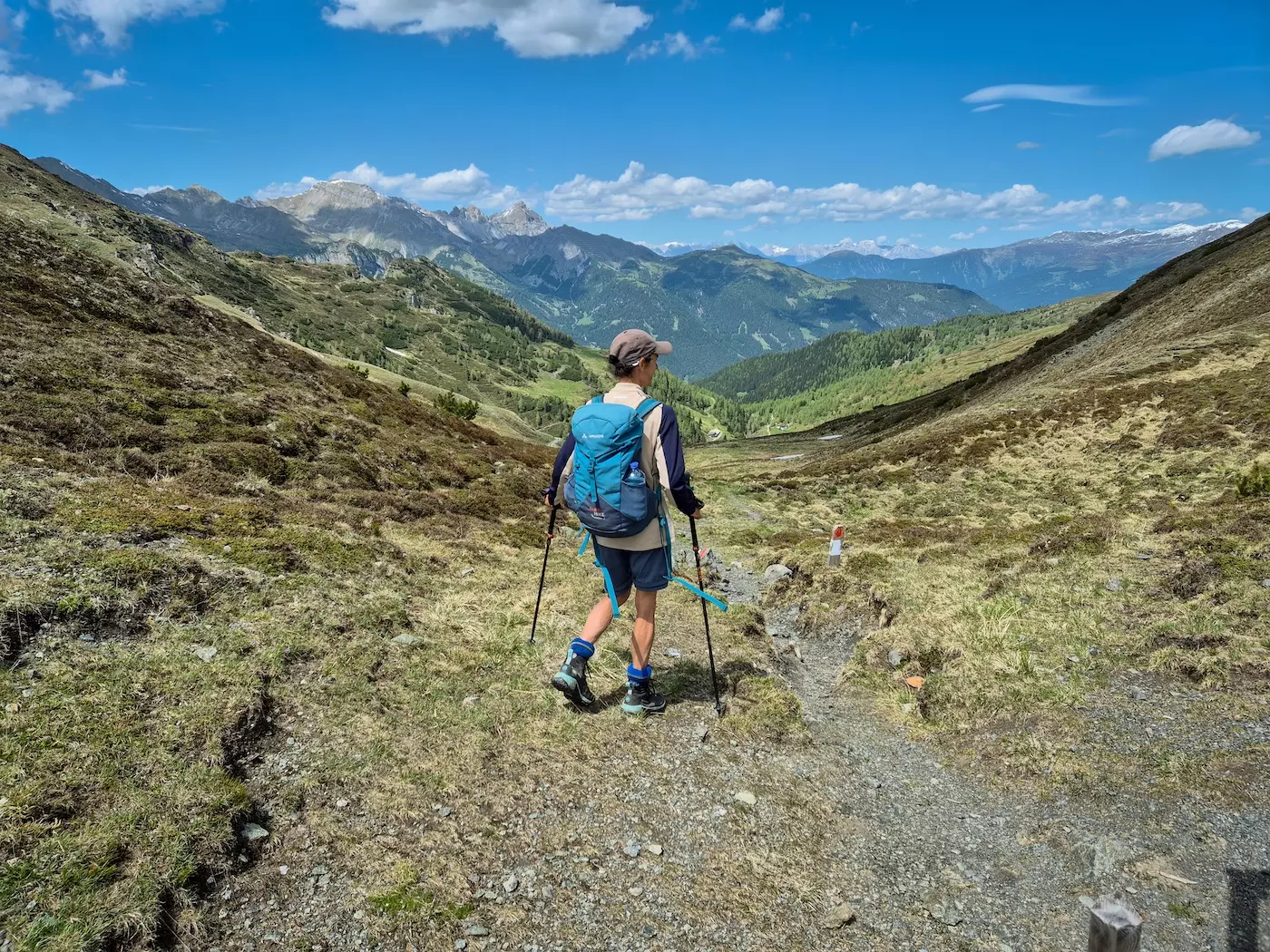
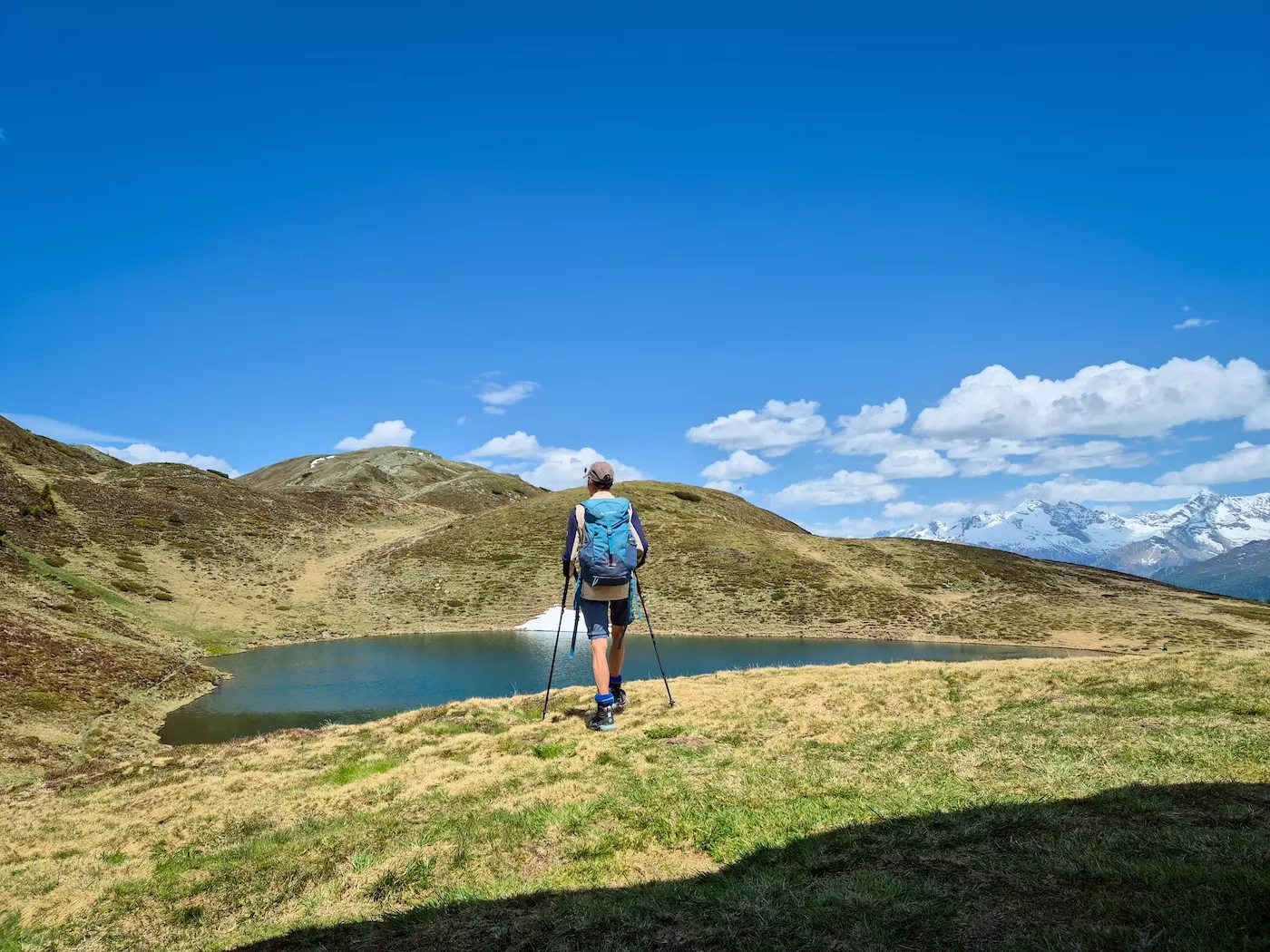
Follow the famous pilgrimage trail of Saint Romedius up to the Truna Hut and onward to the Truna Pass. Nestled within the impressive mountain landscape, the idyllic Lichtsee invites a pause with views of numerous snow-capped three-thousand-meter peaks. The trail then descends through the Nösslachjoch Nature Reserve into the tranquil Obernberg Valley, where the imposing Tribulaun towers above the valley’s end.
Hotel (example): Almi´s Berghotel
distance
climb
descent
duration
Obernbergtal/Wipptal – Colle Isarco
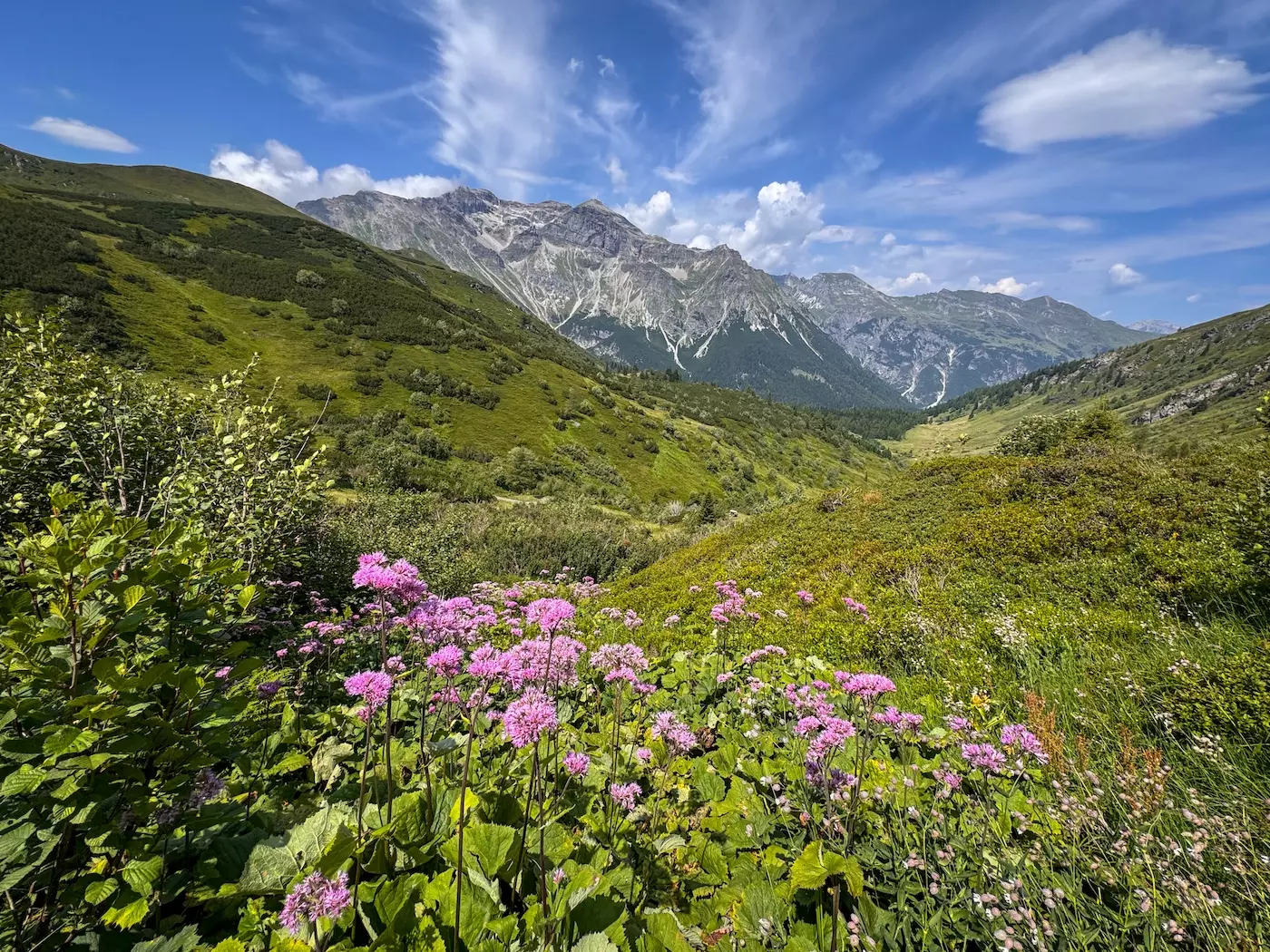
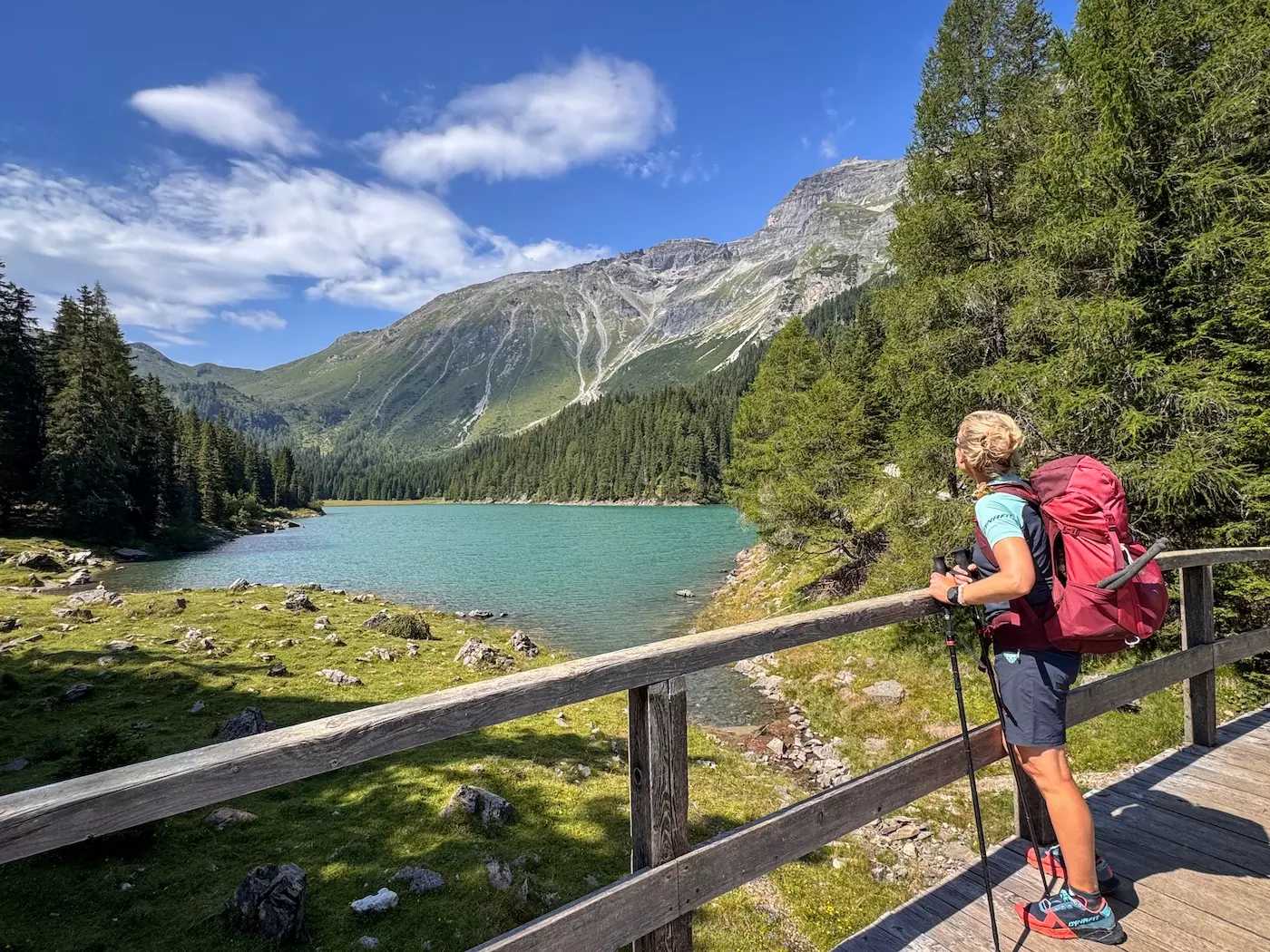
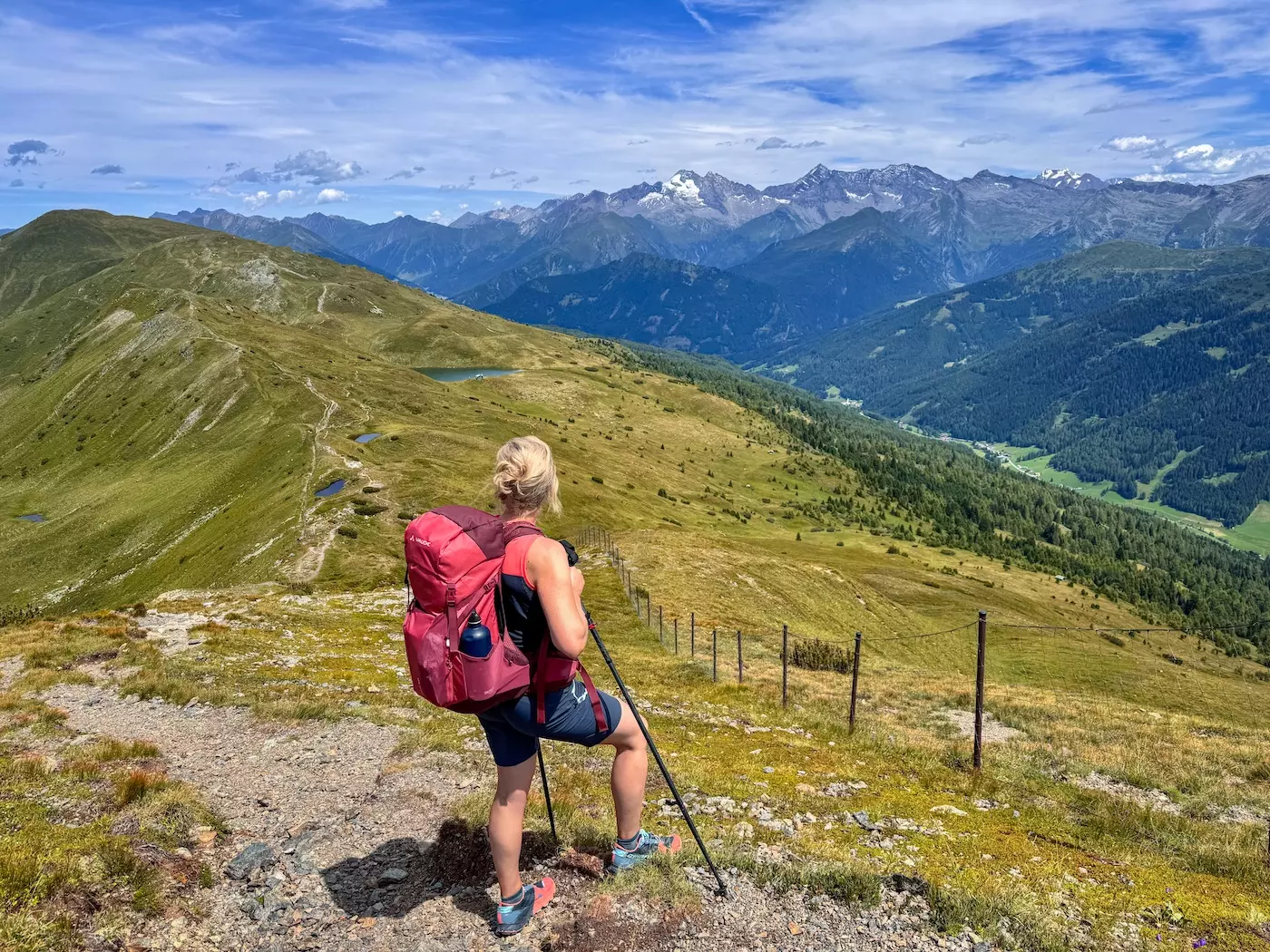
From the turquoise Obernberg Lake, follow the lakeside path past the renowned Maria am See Chapel, a special place of spiritual energy. Continue over blooming alpine meadows and pastures as you ascend to the 2,000-meter-high (6,560 ft) Sandjöchl, crossing the main Alpine ridge and the border into Italy. On the southern side, gentle switchbacks wind through mountain forests down into the picturesque Fleres Valley, with stunning views of the Italian Alps.
Hotel (example): Pension Alpenhof
distance
climb
descent
duration
Colle Isarco - Vipiteno
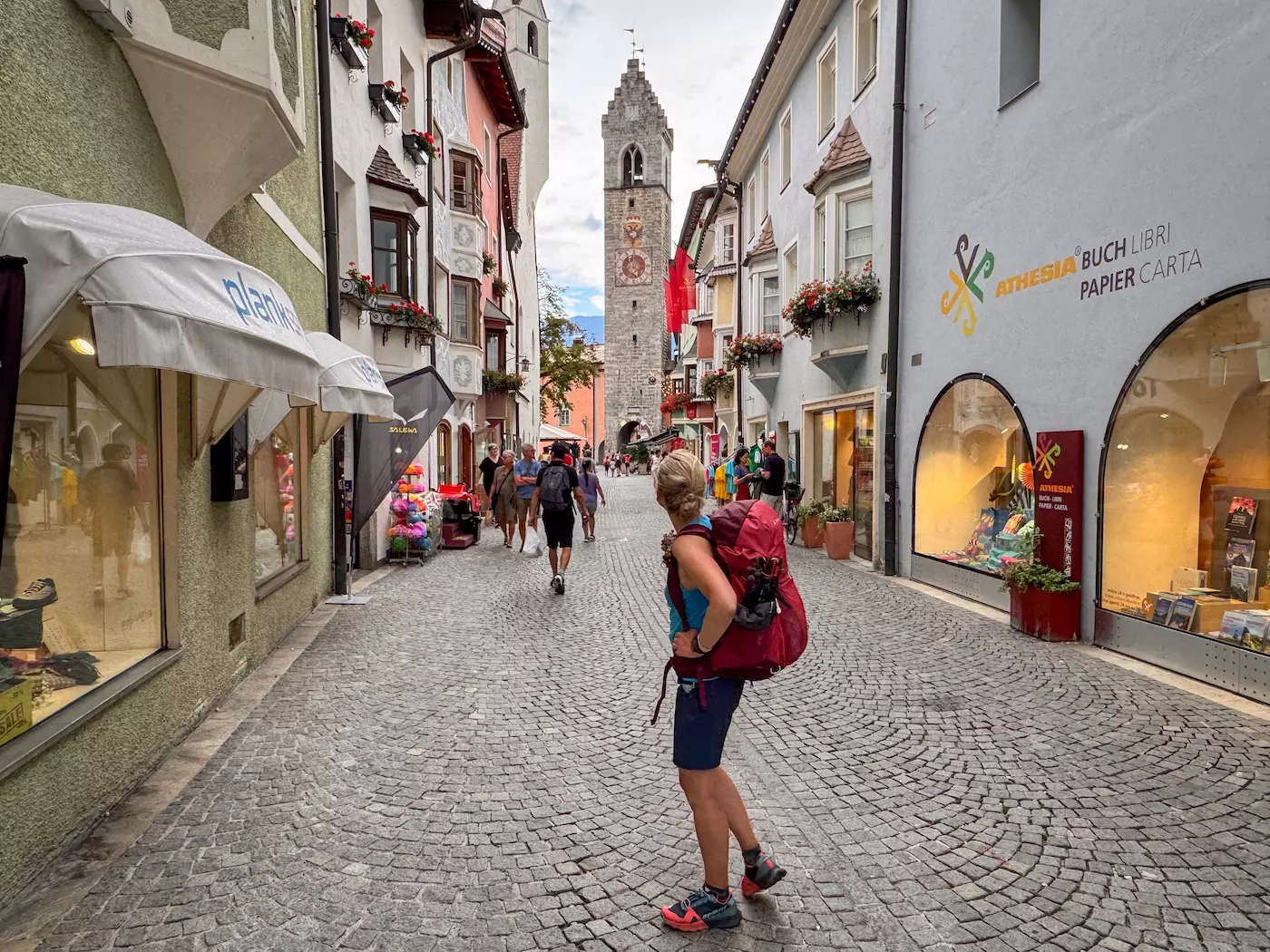
A bus and cable car take you up to the mountain station of the Ladurns Cable Car. From there, a scenic high trail winds along the mountainsides to Vallmingalm, where you can take a break and savor South Tyrolean specialties. For those who wish, a climb up Monte Cavallo (Rosskopf) rewards you with sweeping views of the Dolomites. The day concludes with a cable car descent to Vipiteno, where you can wander through the historic streets and enjoy the perfect ending to your hiking journey with exquisite Italian cuisine.
Hotel (example): Hotel Steindl
distance
climb
descent
duration
Departure or extension
You can now individually extend your stay in Italy and explore the rest independently.
Day 1
Arrival to Garmisch
Stroll through the charming streets and soak up the cozy atmosphere of this popular Bavarian resort at the foot of the Zugspitze.
Hotel (example): Hotel Vier Jahreszeiten Garmisch
Day 2
Garmisch – Mittenwald
Pass the famous ski jump and walk through the dramatic Partnach Gorge, where rushing waters have carved deep into the rock. From Wamberg, hike to the Elmauer Alm and continue through blooming meadows and valleys to Lauter- and Ferchensee. Overnight stays are in Mittenwald, renowned for its violin-making tradition and Lüftlmalerei murals.
Hotel (example): Hotel Gästehaus Bichlerhof
distance
climb
descent
duration
Day 3
Mittenwald – Innsbruck
A transfer takes you to the Karwendel National Park at Möslalm, where the ascent to the Nordkette ridge begins. From the Pfeishütte, a spectacular high trail winds along rocky peaks to the cable car station, offering breathtaking views of the Inn Valley. After a stop at the mountain restaurant, a short cable car ride brings you down to Innsbruck. No visit would be complete without exploring the Old Town and its iconic Golden Roof.
Hotel (example): Hotel Central Innsbruck
distance
climb
descent
duration
Day 4
Innsbruck – Gschnitztal/Wipptal
Take a bus and cable car up to the Serlesbahn mountain station in the Stubai Valley. Against the dramatic backdrop of the Stubaier Alps and their rugged peaks, you hike to the pilgrimage church of Maria Waldrast and linger at the monastery before beginning the alpine ascent to the Blaser Hut on the so-called Flower Mountain. From there, trails through meadows and forests lead down into the rustic and picturesque Gschnitztal.
Hotel (example): Hotel Hohe Burg
distance
climb
descent
duration
Day 5
Gschnitztal/Wipptal – Obernbergtal/Wipptal
Follow the famous pilgrimage trail of Saint Romedius up to the Truna Hut and onward to the Truna Pass. Nestled within the impressive mountain landscape, the idyllic Lichtsee invites a pause with views of numerous snow-capped three-thousand-meter peaks. The trail then descends through the Nösslachjoch Nature Reserve into the tranquil Obernberg Valley, where the imposing Tribulaun towers above the valley’s end.
Hotel (example): Almi´s Berghotel
distance
climb
descent
duration
Day 6
Obernbergtal/Wipptal – Colle Isarco
From the turquoise Obernberg Lake, follow the lakeside path past the renowned Maria am See Chapel, a special place of spiritual energy. Continue over blooming alpine meadows and pastures as you ascend to the 2,000-meter-high (6,560 ft) Sandjöchl, crossing the main Alpine ridge and the border into Italy. On the southern side, gentle switchbacks wind through mountain forests down into the picturesque Fleres Valley, with stunning views of the Italian Alps.
Hotel (example): Pension Alpenhof
distance
climb
descent
duration
Day 7
Colle Isarco - Vipiteno
A bus and cable car take you up to the mountain station of the Ladurns Cable Car. From there, a scenic high trail winds along the mountainsides to Vallmingalm, where you can take a break and savor South Tyrolean specialties. For those who wish, a climb up Monte Cavallo (Rosskopf) rewards you with sweeping views of the Dolomites. The day concludes with a cable car descent to Vipiteno, where you can wander through the historic streets and enjoy the perfect ending to your hiking journey with exquisite Italian cuisine.
Hotel (example): Hotel Steindl
distance
climb
descent
duration
Day 8
Departure or extension
You can now individually extend your stay in Italy and explore the rest independently.
Requirements for hikers
Summary
- Arrival Thursday till Sunday
- Total approx 85 km over 6 hiking days
- 7 nights
- Breakfast
- Luggage transfer
- Transfer Mittenwald - Möslalm
- Downhill fare cable car Innsbrucker Nordkettenbahn
- Uphill ride Serlesbahnen
- Uphill ride Ladurns
- Downhill fare cable car Rosskopf
- Travel documents and GPS data
- Service hotline
- from € 1,099 per person
Facts about the Alps
- The Alpine crossing runs through the central area of the Alps in Central Europe
- The route leads through three countries: Germany, Austria, and Italy
- The region is part of the largest high-mountain range in Europe, the Alps
- The route crosses the Wetterstein Mountains, the Karwendel, and the Stubai Alps, among others
- The main Alpine ridge forms the natural border between the Northern and Southern Alps
- Important Alpine valleys such as the Inn Valley (Inntal), Gschnitz Valley (Gschnitztal), and Eisack Valley (Eisacktal) are located in the region